


Beginning July 1, 2026, sweeping federal financial aid changes under the One Big Beautiful Bill Act will dramatically reshape how students finance professional education—including dentistry. The elimination of Grad PLUS loans, new lifetime borrowing caps, and stricter federal loan limits will take effect with the 2026–2027 aid year, leaving future dental students—especially those from disadvantaged backgrounds—with far fewer options to cover the true cost of attendance.
Under the new law, students will face a $200,000 lifetime cap on federal loans—far below the $400,000–$500,000 cost of dental school. Without the ability to borrow up to the full cost of attendance through Grad PLUS, many will be pushed toward private loans with higher interest rates, credit requirements, and fewer borrower protections. These changes pose serious barriers to entry for students from low-income, first-generation, and historically underrepresented communities.
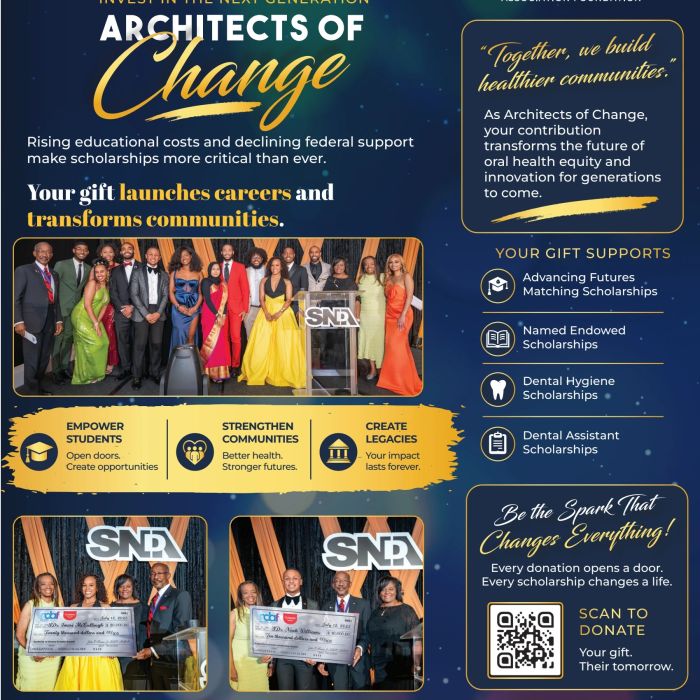
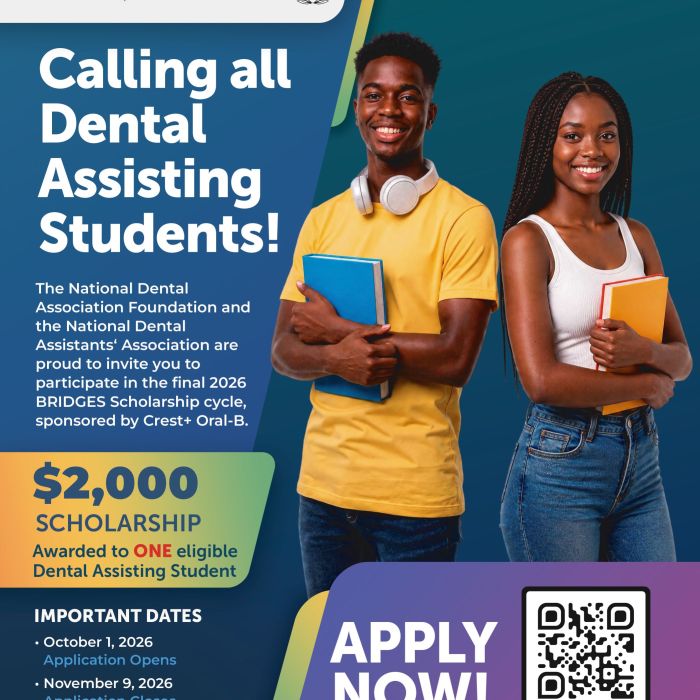
This is where the National Dental Association Foundation (NDAF) becomes indispensable. NDAF scholarships and fellowships help bridge the growing gap between what federal loans cover and what dental school costs. By easing financial burden, promoting diversity, and reducing long-term debt, NDAF support keeps the door to the dental profession open for talented students who might otherwise be shut out.
As the 2026 changes approach, sustaining a strong and diverse dental pipeline will require intentional support. NDAF scholarships are no longer just helpful—they are essential. By investing in NDAF, donors and partners help ensure that future dentists can complete their education, serve underserved communities, and advance health equity despite the coming financial barriers.
Now more than ever, supporting NDAF means protecting access, opportunity, and representation in the dental profession.